


Hello,
Thank you for subscribing to Research Compass. I’m truly excited to launch this first English edition of the newsletter. In this opening issue of 2026, I want to share how I’m re-orienting my research journey for the year ahead.
During the first week back at work, I intentionally observed myself in the role of a researcher. Looking back at 2025, I realized I had grown faster, further, and deeper than I had ever planned.
November 2024: I defended my PhD.
December 2024: I took the winter break and Christmas holiday.
January 2025: I revised and submitted the final version of my dissertation, formally closing my doctoral chapter.
February 2025: Like many international graduates, I began a new chapter—searching for full-time work in Canada.
In March 2025, after a month of applications, I received four interview invitations. Some rejections followed. Some silence, too. That same month, my dissertation had been awarded the Best Dissertation Award from the Comparative and International Education Society (CIES), the largest academic association in the U.S. in my research area. The contrast between uncertainty and recognition was striking.
Then came a fifth interview, this time for a Director of Academic Research position. Two more rounds followed within two weeks. Soon after, I received the offer. I had mentally prepared for six months of full-time job searching. Instead, within two months, I made what a colleague called “a big move in my career development”, stepping into a leadership role, overseeing and leading research development at Yorkville University in Canada.
I began in April 2025. My schedule quickly became 37.5 working hours per week, plus over 20 hours commuting, sustained over eight intense, focused, and deeply productive months. By the end of the year, I was recognized as one of the university’s ten outstanding achievements. Just last week, my annual evaluation was rated: Excellence Performance Beyond Expectations.
Alongside this full-time role, I continued publishing with colleagues across countries. By the end of 2025, I had published six Scopus-indexed articles, with three more accepted for 2026. Five were Q1, two Q2, and two Q3. I served as first author on five papers and co-authored the remaining four.
Beyond academia, I am also a mother and a wife. My days are filled with meetings, deadlines, strategic planning, and research management. After work, I shift into a different role, raising my child, teaching her to speak Vietnamese, accompanying her when she learns how to listen and behave with empathy.
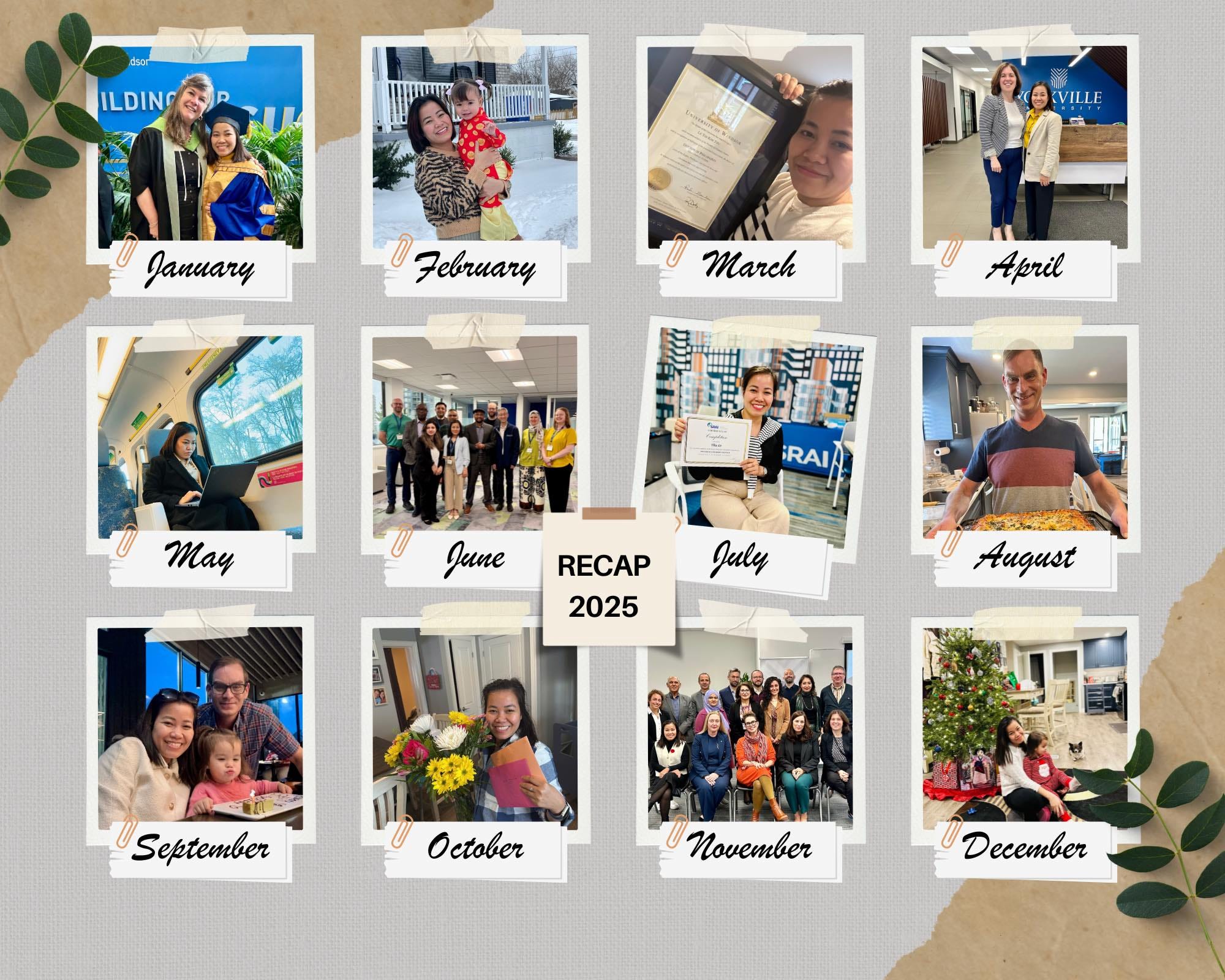
When I reflect on 2025, gratitude comes first. My husband carried much of the household load so I could pursue my goals wholeheartedly. My colleagues and collaborators made meaningful publications possible. My supervisor offered unwavering guidance. And above all, I am grateful for the persistence I have cultivated over many years.
As I step into 2026, I don’t feel compelled to do more. I will not measure the year by how many additional achievements I can accumulate. Instead, I carry a clearer awareness of how I work, how I research, and where I invest my energy.
The question that emerged during my first week back was simple but profound:
How can I continue doing research in a way that is sustainable, intellectually deep, and not repetitive?
Research always moves forward. We become outdated only when we stop updating ourselves.
We update our phones annually. Software evolves constantly. Research tools release new versions every year. Yet many of us quietly continue doing research exactly as we were trained years ago because “that’s how I learned” or “that used to work.”
This year, instead of setting productivity targets like “more publications”, I am committing to six intentional research practices.
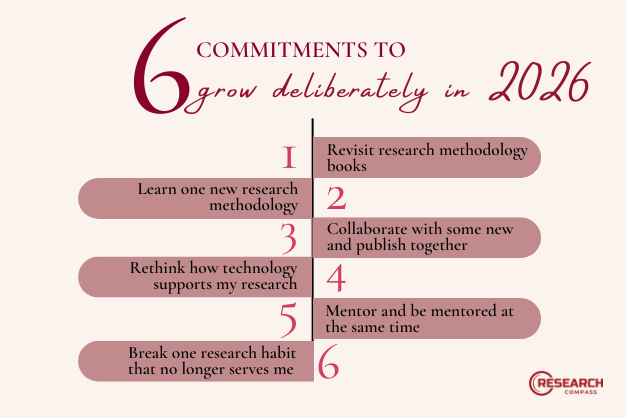
1. Revisit research methodology books—especially new editions
Methodology books are not meant to be read once during graduate school and forgotten. They are foundational epistemological anchors. Every time I revisit them, especially updated editions, I find that my understanding of rigor, reflexivity, and research quality has evolved. Re-reading methodology recalibrates my internal research compass.
2. Learn one new research method
No one knows everything. A PhD often means deep specialization in one methodological tradition. But staying too long within a single paradigm can quietly limit our thinking. Learning a new method expands our analytical imagination. It sharpens our research questions and fosters greater openness when engaging with others’ work.
3. New co-authors for publications
Collaboration has transformed the way I think. Yet I’ve learned that successful collaboration requires more than expertise, it requires alignment in rhythm, values, and trust. The right collaborator accelerates progress; a mismatched one teaches patience and perspective.
I am deeply grateful for the colleagues who have co-authored meaningful articles and book chapters with me. But this year, I intend to intentionally reach out to new scholars, those I have cited, those I follow on LinkedIn, those whose work has shaped mine.
If you are following someone in your field, consider sending that message. Ask a question. Propose an idea. You never know what opens when you knock.
4. Deepen my use of research tools and technology
For years, I conducted literature reviews and coded data manually because that was how I was trained. Learning tools like MAXQDA, Covidence, and Zotero transformed my workflow. They did not make my research “better”, academically technology never replaces scholarly thinking. But they improved clarity, efficiency, and sustainability.
AI and digital tools are not substitutes for intellectual rigor. They are energy managers. They allow us to reserve cognitive bandwidth for conceptual and theoretical work.
5. Become a research mentor, so I can keep learning
Mentorship is not merely about guiding others. It compels me to articulate what I know, methodologically, theoretically, practically. Mentoring strengthens confidence while preserving humility. Research remains a lifelong learning process, for both mentor and mentee.
6. Let go of an ineffective research habit
For me, that habit is sitting in front of a screen in prolonged ambiguity, or pretending I understand something when I don’t. Instead of masking uncertainty, I want to confront it directly. Where am I unclear? Where am I inefficient? Where am I avoiding depth?
Slowing down can be intellectually honest.
Recently, I read The 12 Week Year. It reminded me of something simple yet powerful: rather than viewing an entire year as an overwhelming horizon, focus intensely on shorter cycles with high commitment.
Perhaps 2026 does not require ambitions. Perhaps it requires clarity in small choices:
what I read, what I learn, who I collaborate with, how I allocate energy, and when I pause to reflect.
If 2025 was the year I flew fast, 2026 is the year I research with intention. Slower, but deeper, more sustainable, and aligned with my long academic journey.
Research Compass will follow that rhythm too. Not loud, but thoughtful. Each issue will be a small checkpoint, a moment for you to recalibrate your own research journey.
Thank you for being here, and for reading to the end.
May your 2026 be slow enough for reflection, clear enough for wise choices, and strong enough for you to continue flying in your own way.
I look forward to seeing you in the next issue of Research Compass.
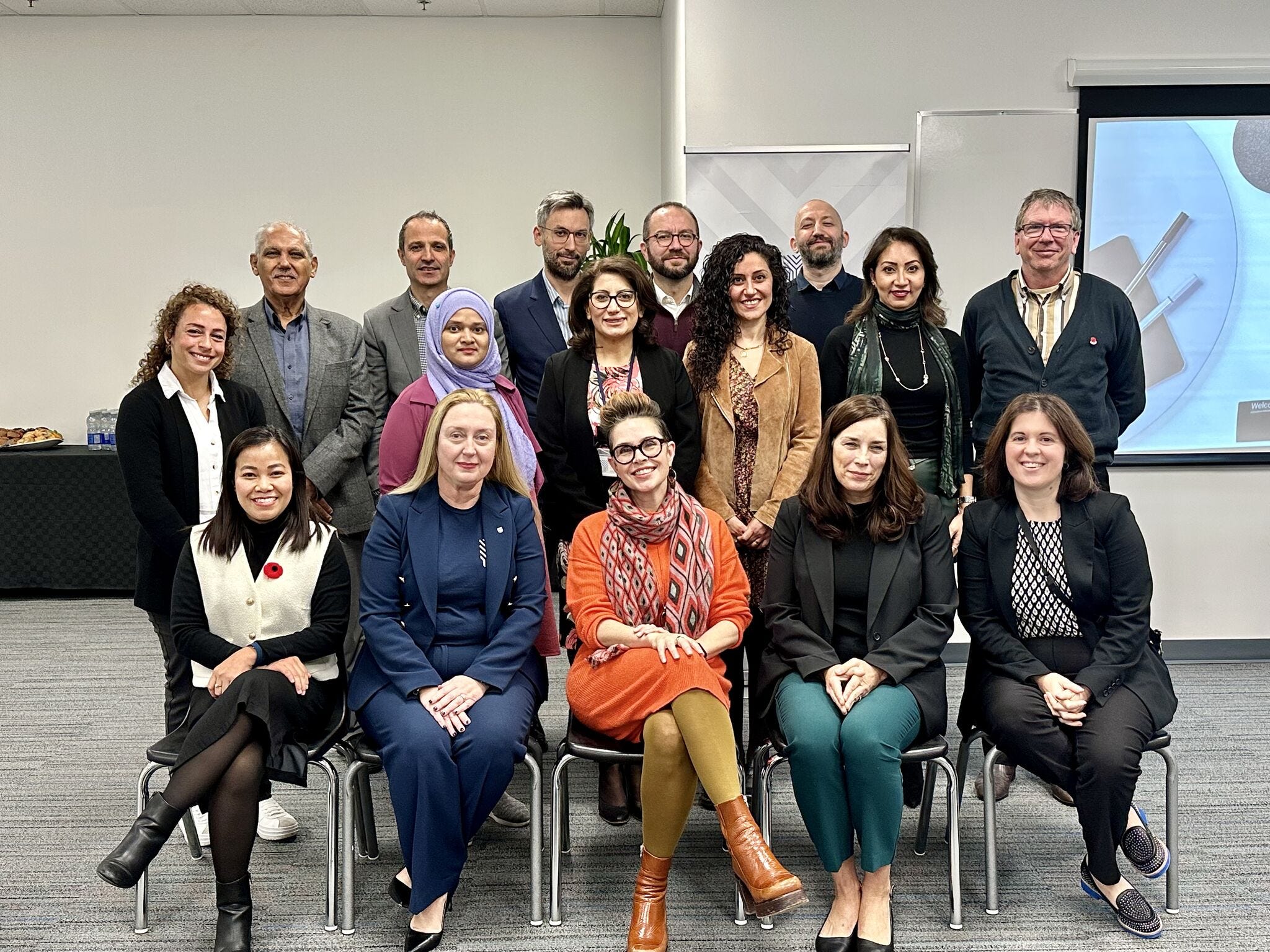
Photo: One of my successful research events in 2025!