


In today’s academic context, digital tools and artificial intelligence are becoming an increasingly important part of research practice. But effective use is not about using as many tools as possible. It is about choosing the ones that genuinely support your workflow and reduce repetitive technical tasks.
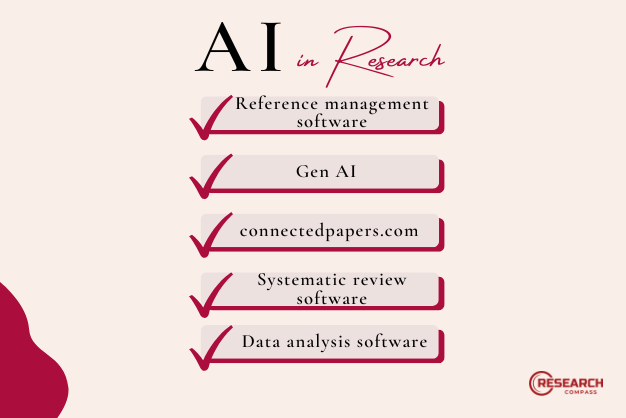
A practical way to think about AI and research software is this: they are productivity tools, not substitutes for scholarly thinking. Below are several categories of tools that commonly support the research process, from reference management to data analysis.
1. Reference management software
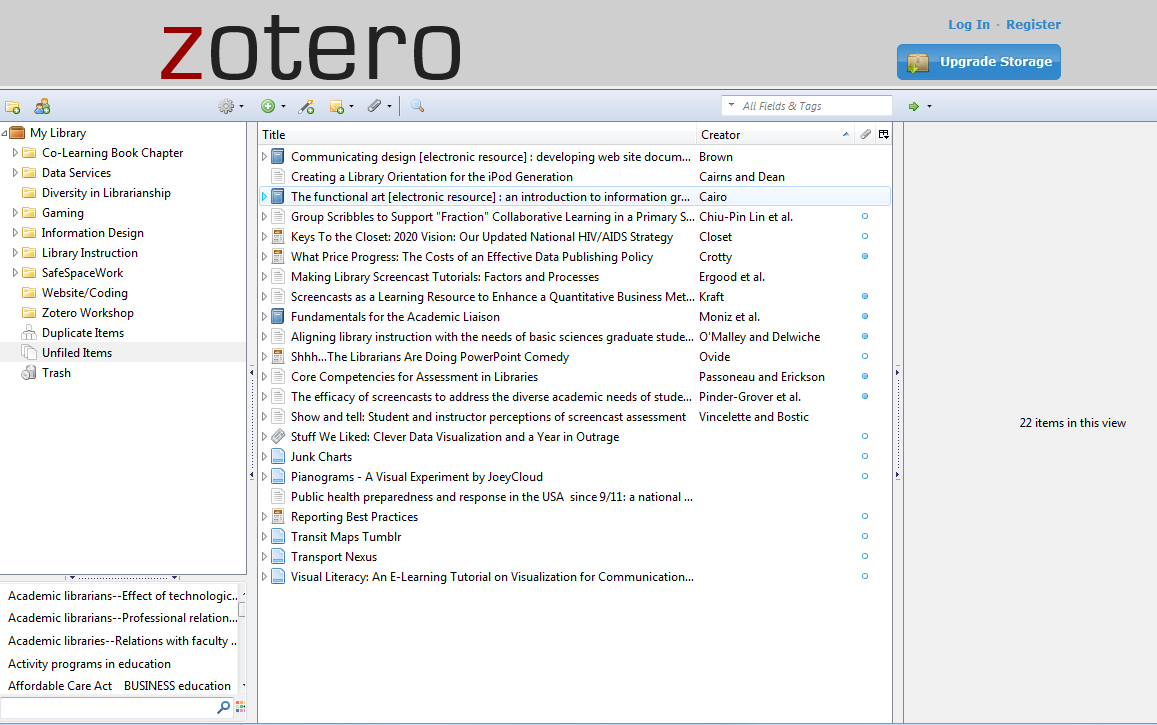
I know many researchers still manage references manually. I used to do the same, and for a while it felt manageable. But at some point, I realized that research had become part of my daily work. And once research becomes part of your everyday practice, references are no longer a small technical task. They become an ongoing demand on your time and attention.
That was when I decided to learn Zotero. I wanted to spend less time searching, checking, and correcting small technical details. In addition to Zotero, many researchers also use Mendeley or EndNote.
Using Zotero helps address many of the limitations of managing references manually:
organizing sources neatly into folders by project,
generating and formatting citations automatically in multiple styles, such as APA or Chicago,
synchronizing and sharing sources, especially for team-based research,
integrating with writing software so you can write and manage references without constantly breaking your focus, and
reducing the risk of missing sources in your citations.
Reference management software allows you to shift time away from technical formatting and toward higher-value academic work: reading, analyzing, and synthesizing literature.
The main limitation I have found with Zotero is that it is not always flexible when source information imported from the web does not match the citation style you need. For example, if a title is imported in UPPERCASE, I may still need to correct it manually in Sentence case. for APA 7th.
2. Generative AI
AI can be useful for:
reviewing sentence clarity,
suggesting alternative phrasing,
checking paragraph coherence,
recommending journals based on topic and word count,
providing initial direction on a research topic or theoretical frame, and
suggesting terminology or conceptual angles.
Sometimes, after drafting a paragraph, I know the idea is there, but the wording still feels awkward. In those moments, I may ask GenAI to help improve clarity. But I always review the language carefully. AI sometimes produces wording that sounds polished but is not appropriate for academic writing. In other words, it can become overly decorative in places where precision matters more.
I also use GenAI as a faster, more focused version of search. For example, if I have a manuscript that still exceeds 10,000 words and I need to identify journals in my area that accept papers of that length, I may ask AI to generate an initial list. Then I go directly to each journal website myself to verify the aims, scope, and submission guidelines before making any decision.
At times, I also use GenAI to generate ideas. For instance, when analyzing data, I may encounter a complex excerpt and struggle to name what I am seeing conceptually. In those moments, AI can sometimes suggest useful terms or possible interpretive directions.

That said, academic writing demands high precision in both terminology and argument. Every AI-generated suggestion must therefore be reviewed, revised, and judged carefully.
3. Literature discovery and citation-network tools
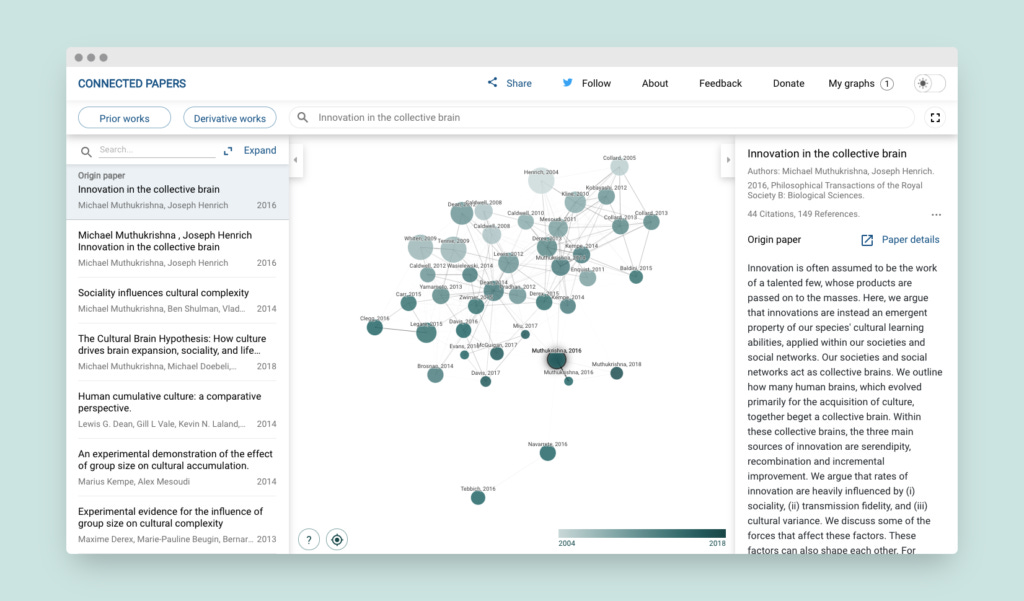
Platforms such as Connected Papers, ResearchRabbit, and Litmaps help researchers identify related studies by visually mapping connections between papers, beginning with a key article.
These tools offer several advantages:
They visualize relationships among studies in an intuitive way.
They save time by linking quickly to related papers across platforms.
They are useful across disciplines, whereas some databases are more field-specific.
They do not rely only on direct citation links; they also identify content similarity, which helps surface relevant studies that may not cite one another directly.
They make it easier to trace both earlier and more recent work in order to understand the broader landscape of a topic, including methods, theories, and contexts.
These tools are especially useful once you have already identified several core papers. From there, you can move outward in both directions: backward to foundational work and forward to newer studies.
One limitation is that free accounts often restrict the number of searches. For that reason, I usually use these tools only after I have already searched databases or Google Scholar and identified a few high-quality anchor papers that are closely relevant to my project. Starting from a strong core paper makes the citation map much more meaningful. It helps me see broader research trends and assess the novelty of my own work more clearly.
4. Tools for systematic reviews
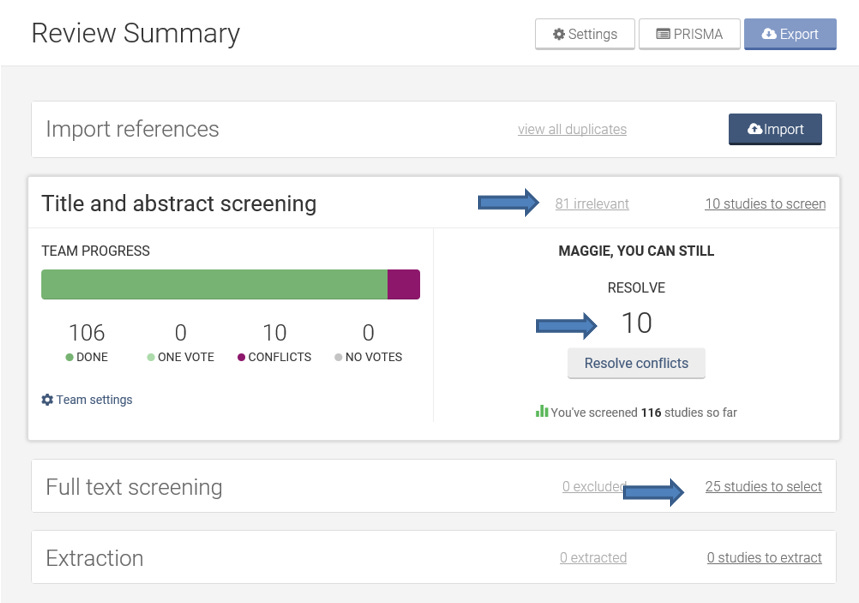
When I need to conduct a systematic literature review, I usually turn to Covidence or Rayyan. These platforms are especially useful for research teams because they help automate parts of the review process, support collaborative screening, and make source selection more efficient.
They are particularly helpful for:
screening studies in multiple rounds,
supporting team-based reviewing,
tracking inclusion and exclusion decisions, and
managing PRISMA-related processes systematically.
These tools help standardize the review workflow and reduce errors in large-scale evidence synthesis. Their main drawback is cost. Most are paid platforms, so they are usually most suitable for team projects or funded studies.
5. Data analysis software
Programs such as MAXQDA, NVivo, and ATLAS.ti play an important role in qualitative data analysis and can also support literature synthesis.
At this point, MAXQDA is very much my favorite because of how much it improves on manual work.
Although it is often introduced as data analysis software, I use it for both literature reviews and qualitative analysis. It solves many of the frustrations I used to face when doing literature reviews manually: reading PDFs one by one, highlighting passages, and keeping notes separately in Excel or Word.
What makes it especially valuable for me is that everything stays in one place:
the articles I read,
the notes I write,
the codes I create, and
the analytic structure that develops over time.
Because everything is centralized, it becomes much easier to retrieve notes later for synthesis. MAXQDA’s search and retrieval functions are particularly strong. It also supports comparing coded data, identifying patterns, and building themes: both in literature reviews and in empirical qualitative analysis.
Another major strength is that it works with multiple data types, including:
text,
images,
audio, and
video.
In short, software like MAXQDA can support many stages of research:
coding and analyzing qualitative data,
organizing literature for review,
retrieving and synthesizing reading notes,
building themes and analytic frameworks, and
working across multiple forms of data.
Keeping your documents, notes, and coding in one platform makes the research process far more systematic and far easier to navigate than manual methods. You no longer have to jump endlessly from one PDF to another just to piece your thinking together.
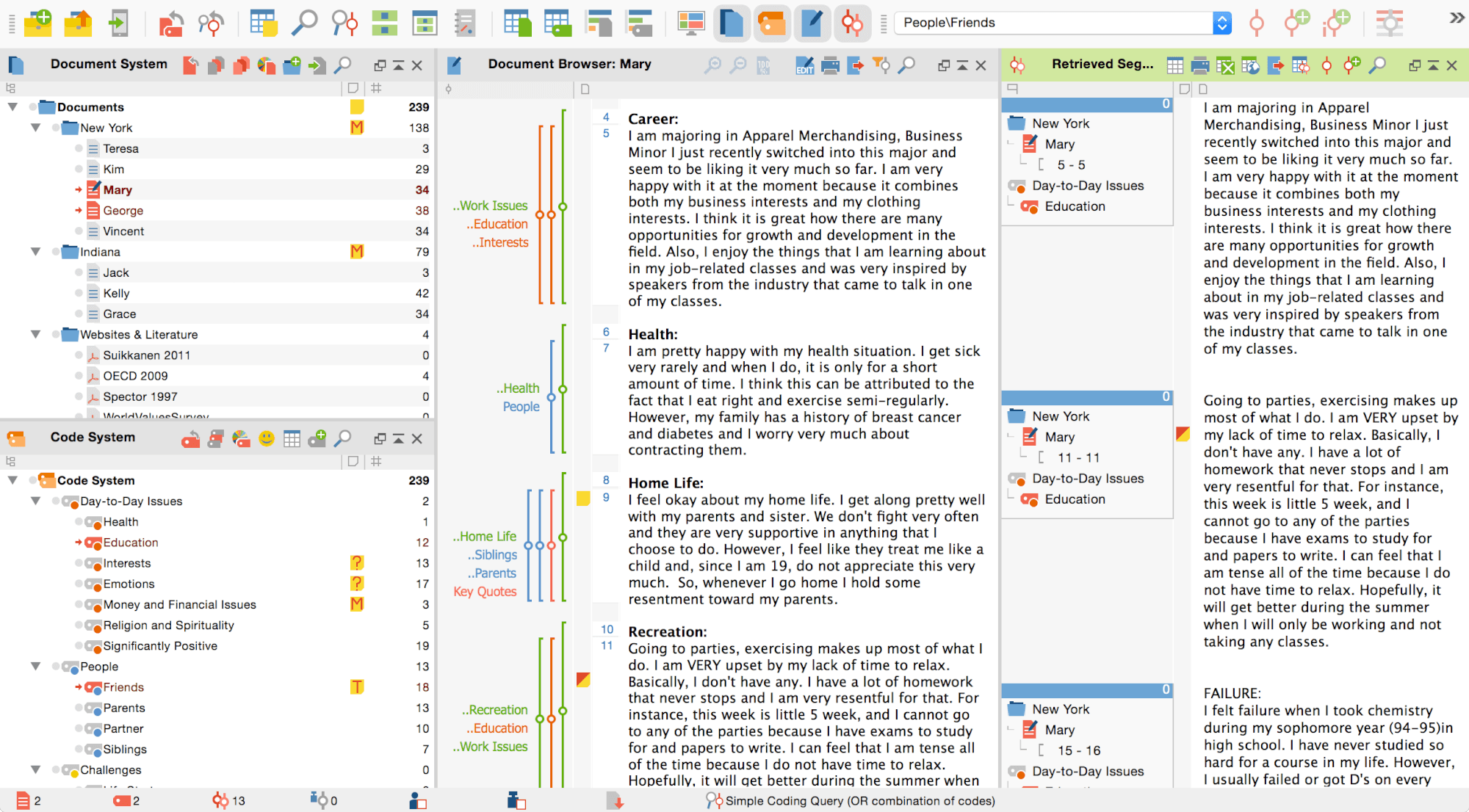
Honestly, the only real disadvantage I have found with MAXQDA is that you have to pay for it. That said, it does offer student pricing and frequent promotions. The cost can be quite reasonable, especially if it significantly improves the quality and efficiency of your research workflow.
Chị ơi, em gặp vấn đề về takes notes với file pdf bài báo. Ở Endnote (em có bản paid của trường) nhưng em thấy việc takes notes riêng lẻ từng bài rất khó để em kết nối các bài với nhau thông qua các ghi chú. Chị có thể chia sẻ cách kết nối các ghi chú của nhiều bài dùng trong literature review bằng MAÃQDA và Nvivo được không ạ? Em cảm ơn chị nhiều ❤️